tools
tech
Why Your Tech Guy Disappears After Delivery (And What It's Actually Costing You)
You paid a developer $5,000 to build your website. It looked great on launch day. Three months later, a plugin broke and your contact form stopped working. You don't know when it broke. You don't know how many leads you lost. You email the developer. No response. You call. Voicemail. You try again a week later. Nothing.
So you hire someone new. They charge $2,000 just to figure out what the last person built, another $1,500 to fix the form and update the things that should have been maintained, and now you're $8,500 into a website that should have cost $5,000 - and you still don't have anyone you can call when the next thing breaks.
This is the story I hear more than any other. Not once. Not occasionally. Constantly. Across 24 years of working behind the scenes in hundreds of businesses, the single most common tech frustration isn't that the work was bad. It's that the person who did the work vanished.
The website guy. The funnel builder. The automation specialist. The agency that built your CRM setup. They delivered something that worked on day one. Then they moved on to the next client, and you were left alone with a system you don't fully understand and no one available to help when something inevitably breaks.
The Deliver-and-Disappear Model
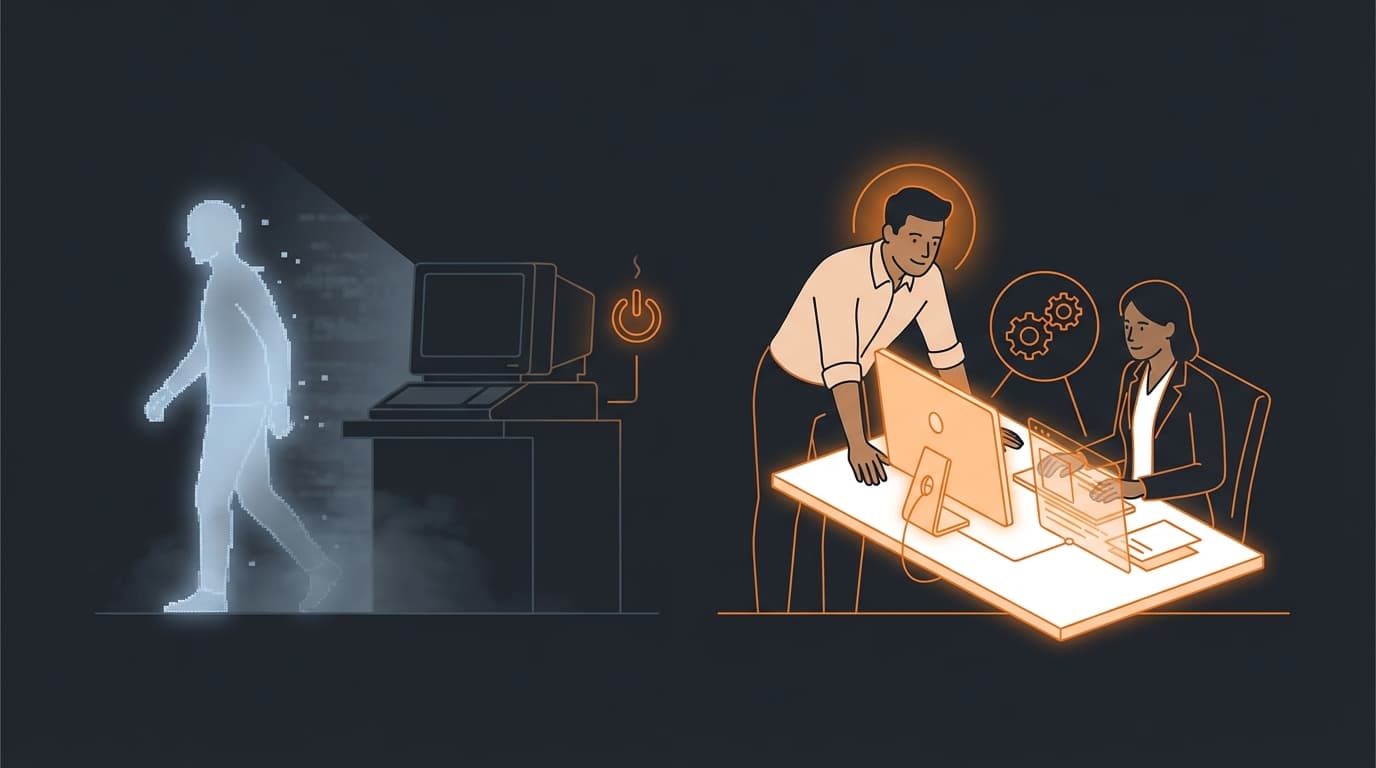
This isn't a bug in the system. It's the system.
Most freelancers, agencies, and tech providers are structurally incentivized to finish your project and move to the next one. Their revenue comes from new builds, not maintenance. Their business model is: sell the project, build the project, deliver the project, find the next project. Ongoing support is either unprofitable for them, unscalable, or both.
This means the moment your website goes live or your automation starts running, you're functionally on your own. Oh, they might offer a 30-day support window. Maybe even 90 days if they're generous. But after that, getting a response to your email becomes a lottery. And the depth of help you get - "have you tried clearing your cache?" - isn't exactly the technical partnership you were promised during the sales call.
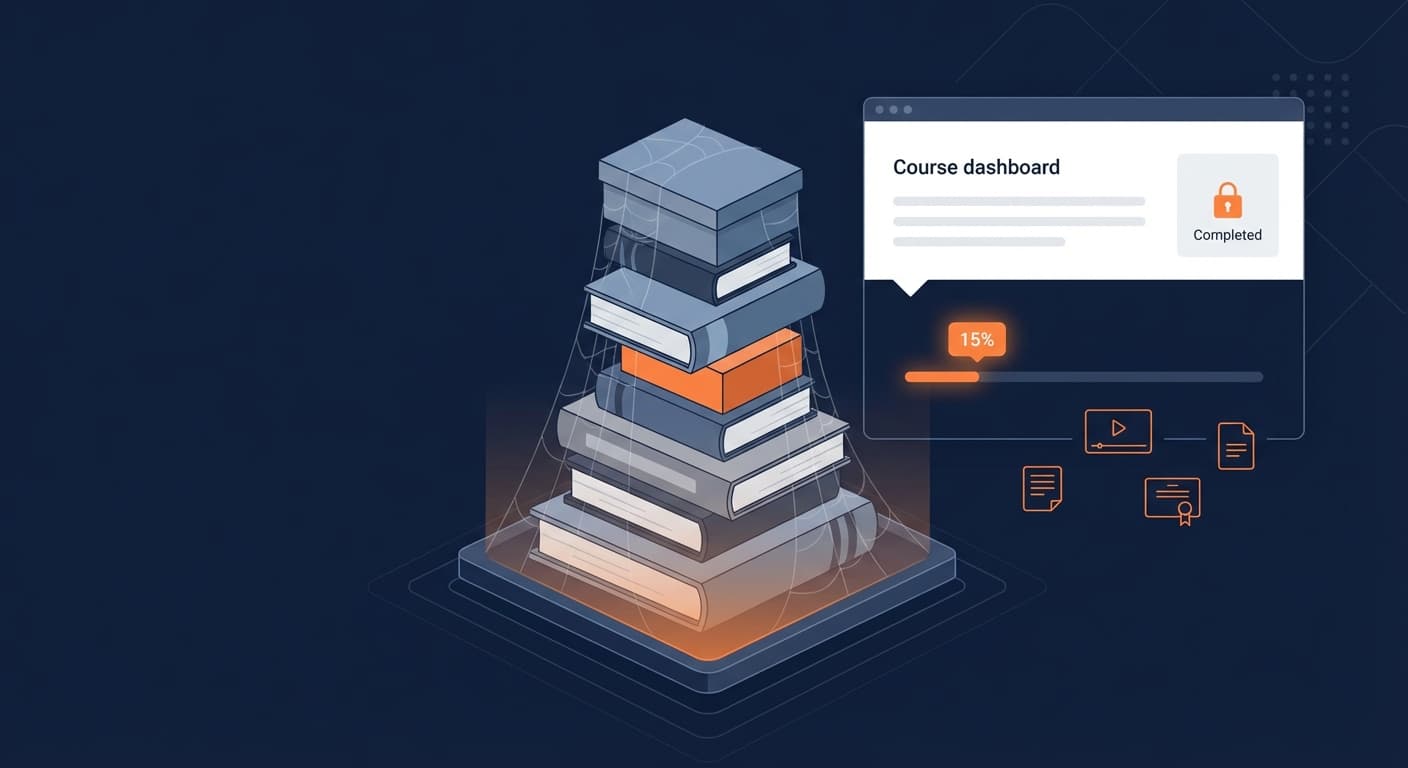
The result is a graveyard of half-maintained business assets across your operation. A website that hasn't been updated in 14 months. An email sequence that still references last year's offer. An automation that stopped working three weeks ago and nobody noticed because nobody's monitoring it. A CRM with data that's drifted so far from reality that your team has stopped trusting it and gone back to spreadsheets.
Each of these was a real investment. Each of them was supposed to be infrastructure - something that works for you over time, generating leads, converting customers, saving hours. Instead they're depreciating assets, getting less effective every month because nobody's maintaining them.
The Hidden Cost of No Ongoing Support
The upfront build cost isn't where the real money is lost. The real damage happens in the months and years after delivery, when the asset slowly stops performing and nobody's watching.
Lost leads you never see. That broken contact form? You don't get a notification that leads aren't coming in. You just notice - eventually - that the phone stopped ringing. How long was the form broken before you caught it? A week? A month? At $3,000 per client, even a few missed leads is more expensive than whatever ongoing support would have cost.
Compounding neglect. Websites and marketing systems don't stay current on their own. Platforms update. Integrations change. Security vulnerabilities appear. SEO requirements shift. A website that was optimized when it launched is not optimized 18 months later - it's a time capsule. And every month it goes unmaintained, the gap between where it is and where it should be gets wider and more expensive to close.
The rebuild cycle. Because nobody's maintaining the existing system, it eventually degrades to the point where someone decides "we need a new website" or "we need to rebuild the funnel." So you pay for the same thing again. Not because the original was bad, but because nobody was keeping it alive. I've watched business owners rebuild the same website three times in six years, spending $15,000+ total, when $200/month in ongoing support would have kept the original performing the entire time.
Your time as the backup tech team. When the tech person disappears, guess who becomes the tech department? You. The business owner who should be spending time on strategy, clients, and growth is now Googling "why is my WordPress not sending emails" at 10 PM. Every hour you spend troubleshooting something a tech partner should handle is an hour stolen from the work that only you can do. (If that pattern sounds familiar, I wrote about the real cost of those stolen hours and how they compound over time.)
Why the "Find Someone Cheaper" Response Makes It Worse
The natural response to getting burned by a disappearing tech person is to look for someone cheaper next time. The logic makes sense on the surface: "I spent $5,000 and got abandoned, so this time I'll spend $2,000 and if they disappear too, at least I'm out less money."
This is backwards. The cheaper option is almost always more likely to disappear, not less. The person charging $2,000 for a website is running on volume. They need 5-10 projects per month to pay their bills. They don't have time for ongoing support even if they wanted to offer it. The math doesn't work.
Meanwhile, the business owner develops a deeper and deeper distrust of anyone offering tech help. They've been burned twice, three times, maybe more. So they start trying to do it themselves - watching YouTube tutorials at midnight, struggling through things that should take 20 minutes but take them a full weekend. They tell themselves they're saving money. They're not. They're spending their most expensive resource (their own time) on their lowest-value work (technical maintenance). It's the most expensive savings in business.
The real problem was never the price. It was the model. Deliver-and-disappear doesn't work - not at $2,000, not at $10,000, not at any price. What works is a fundamentally different relationship with the person helping you build and maintain your business technology.
What Ongoing Implementation Support Actually Looks Like
The alternative to deliver-and-disappear isn't "hire a full-time CTO." For most businesses doing $250K to $5M, that's overkill and too expensive. The alternative is having someone who knows your business, knows your systems, and is available when things break - or better yet, is maintaining things so they don't break in the first place.
I co-ran a paid community of business owners for 9.5 years. Over 200 monthly calls. I built their websites, set up their marketing systems, configured their automations. But the real value wasn't the build - it was the decade of ongoing support after the build.
Brad Bassi has been crediting his website with generating 60-80% of his business for years. Not because the website was magic on launch day. Because it kept working. It got maintained. When something needed updating, it got updated. When a new opportunity appeared - a feature, an optimization, a platform change - it got implemented. The website became a compounding asset instead of a depreciating one, and that only happens when someone's paying attention to it over time.
Ted Lucier was mid-launch on a product he'd already sold. Customers were waiting. One technical piece wasn't working, and his software company's support couldn't solve it. He'd been stuck for weeks. He sent me a message on Slack. I sent back a screenshot with the fix. Thirty seconds. He told me afterward: "You really can't put a price on that, both the peace of mind, but the actual freaking action." That's what ongoing support looks like in practice - not a ticket system that responds in 72 hours, but a real person who knows your setup and can solve problems in real time.
On our final call in April 2025, my business partner Roy Meyer told the group: "None of this that we have done could have happened without John. He has worked incredibly hard many times in the background that everybody doesn't know." That last part is the key. The behind-the-scenes work - the monitoring, the updates, the quiet fixes that prevent problems before they become emergencies - is invisible when it's working. And that invisibility is exactly why most business owners don't value it until it's gone.
Five Things to Look for in Ongoing Tech Support

Whether you're evaluating a freelancer, an agency, or a community, here's what separates someone who will stick around from someone who will deliver and vanish.
1. They talk about maintenance before you sign.
If the sales conversation is 100% about the build and 0% about what happens after, that's your signal. The person who will disappear is selling a project. The person who will stay is selling a relationship. Listen for phrases like "ongoing optimization," "quarterly reviews," "what happens when things change." If they don't bring it up, they're not planning to be there.
2. They respond in hours, not days.
Test this before you commit. Send a question at 2 PM on a Tuesday. If you get a thoughtful response the same day, that's a good sign. If you get a canned autoresponse or silence for 48 hours, you're already seeing what "support" looks like after the contract is signed.
3. They understand your business, not just the technology.
The person who knows your CRM inside and out but doesn't understand your sales process will build you something technically correct and practically useless. Look for someone who asks about your customers, your revenue model, your team structure, your bottlenecks. The tech should serve the business, and the person building it should understand both. (This is the same principle behind optimizing before scaling - if your tech partner doesn't understand your business, they'll build tools that look good but don't move the needle.)
4. They've worked with people like you for years, not months.
Ask for references that go back more than a year. Anyone can deliver a great project and be responsive for 90 days. The real test is: are they still available and still helpful 18 months later? Three years later? The business owners who referred me over the years didn't reference the day I built their website. They referenced the years I kept it performing. Long-term track record is the only credential that matters for ongoing support.
5. They teach you as they build.
The worst tech relationship creates dependence. You can't change anything without them. You don't understand what they built. You're trapped. The best tech relationship builds your capability alongside the system. They explain what they're doing and why. They show you how to make basic changes yourself. They build documented systems so that your team can handle routine maintenance without a phone call. The goal isn't to make you a developer - it's to make sure you're never helpless if the relationship ends.
The Compounding Website (And Why It Matters More Than You Think)
Here's something I've watched play out across dozens of businesses over 24 years, and it's the best argument for ongoing support I can make: the businesses that treat their website as a living asset - maintained, optimized, and improved over time - consistently outperform the ones that rebuild every two to three years.
It's compounding interest applied to your digital presence. A website that gets regular content updates improves its search rankings. Better rankings bring more traffic. More traffic generates more data about what works. That data informs optimizations. Optimizations improve conversion rates. Better conversion rates mean more revenue from the same traffic. And the cycle repeats.
Michael Snider is a good example. I built out his marketing and follow-up systems. Eight months later, he was averaging one private order per day. Not from networking. Not from speaking. From the system. In his words: "This has come almost entirely from the email system. I haven't been doing much networking or speaking lately, so it's clear the program is generating real results." The system was doing the work because someone built it right and it kept running. That's what a maintained system produces over time.
A website that's rebuilt every three years never gets past the starting line. It launches, performs okay, degrades, gets replaced, starts over. No compounding. No accumulated SEO authority. No data-driven optimization. Just an expensive cycle of starting from scratch.
The business owners I've worked with who saw the biggest returns - the ones generating 60-80% of their revenue from their websites years after launch - all had one thing in common. They didn't just invest in the build. They invested in someone who stayed.
The five criteria above will help you evaluate your next tech relationship. But here's the uncomfortable truth I've watched play out for over two decades: finding ongoing support as an individual business owner is genuinely hard. The economics don't favor it. Good tech people want big projects, not $200/month maintenance contracts. Agencies want retainers that are too expensive for a business doing $500K. And the affordable options are the ones most likely to disappear.
That's part of why the Implementation Club exists. Not just for the Thursday sessions where we build systems together in real time - though that's where the actual implementation happens. It's for the Tuesday afternoon when your email automation stops firing and you need someone who can look at it, understand it, and fix it before you lose three days of leads. It's for the moments between sessions when something breaks and you need a real answer from someone who knows your setup, not a chatbot or a support ticket queue.
The Slack community is full of business owners who've been burned by the deliver-and-disappear model and decided they'd rather have consistent, ongoing implementation support than keep rolling the dice on the next freelancer. They post their tech problems and get real solutions - often the same day. That's not a feature. That's the whole point.
You shouldn't need to Google "why is my form not working" at 10 PM. You should have someone you can ask.

Jon Barrett
Jon Barrett is the founder of Implementation Club — a community for entrepreneurs who are done planning and ready to build. He's spent 20+ years building operational systems for businesses of every size, and now helps owners implement faster, get unstuck in real-time, and finally build the business they've been describing to people for years.