systems
Building a Systems Culture: How to Get Your Entire Team Thinking in Systems (Not Just Following Checklists)
I was touring a factory in China a few years ago. Fifty stations on the production floor. A flat sheet of tin came in one end and a finished product came out the other. At every station, a different worker handled one specific step. Each step was documented. Each step produced the same result every time. If a worker left, someone new could plug into that station and start producing immediately - because the system ran the process, not the person.
Nobody was guessing. Nobody was improvising. Nobody was staying late to redo someone else's work. The system ran the business.
I came home, walked into a client's office, and watched the owner answer the same question from three different team members in the same afternoon. "How do I handle this?" "Where do I find that?" "What's the process for this?" Every answer was in his head. None of it was written down. He was the factory - all fifty stations running through one person.
That's the gap. Not between having systems and not having them. Most business owners I work with have some documented processes. They've built a few SOPs. Maybe they've gone through the DOOR System and created some solid documentation. But the systems exist in a folder somewhere, and the team still comes to the owner with every question. The documentation exists. The culture doesn't.
The Difference Between Having Systems and Being a Systems Business
There's a meaningful difference between a business that has systems and a business that runs on systems. The first one has a Google Drive folder with some process documents that get referenced occasionally. The second one has a team that instinctively asks "what does the playbook say?" before asking the owner anything.
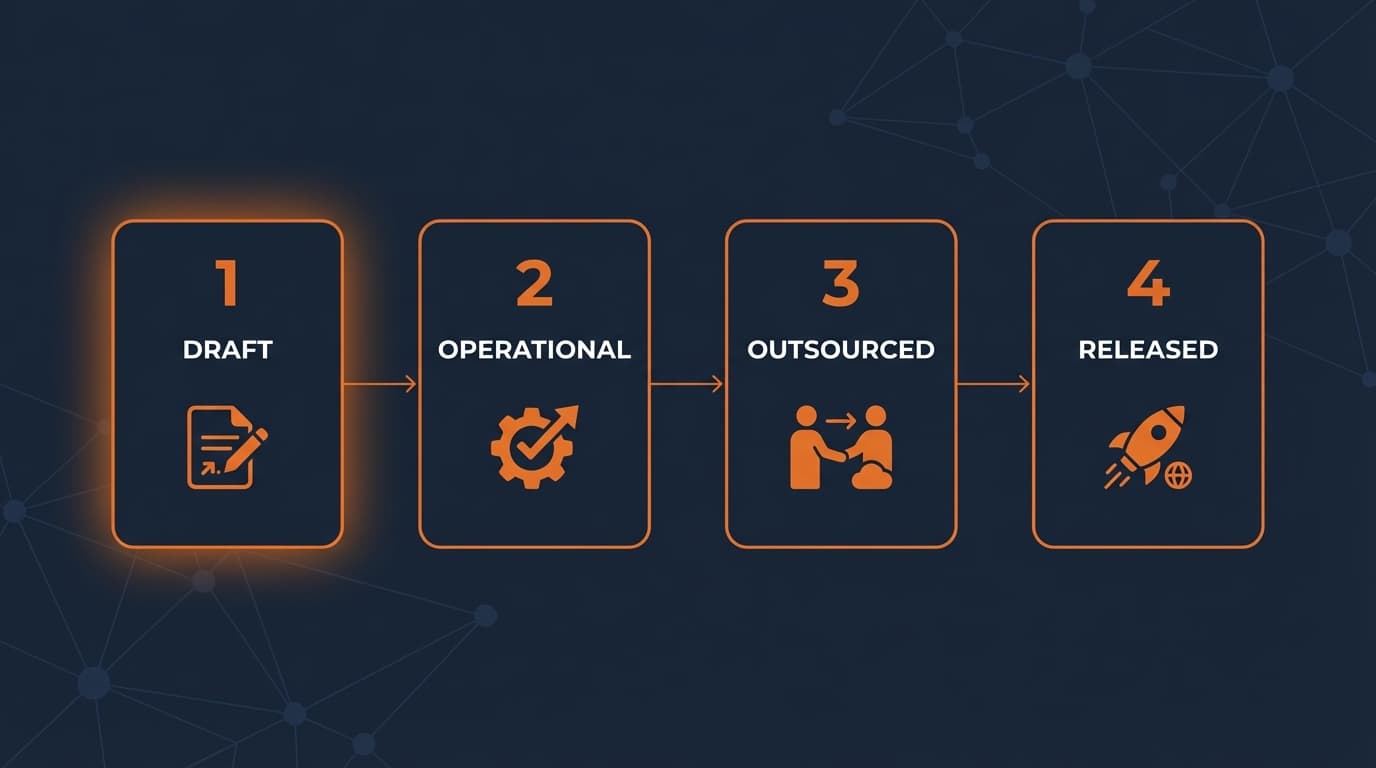
Most businesses are stuck at stage one. The owner spent a weekend documenting their five most important processes. Maybe they even did it well - detailed steps, clear outcomes, quality checks built in. They handed the documents to their team. The team nodded, said thanks, and went right back to asking the owner for answers.
This is where most systems initiatives die. Not because the systems were bad, but because the culture never shifted. The team's default behavior is still "ask the boss." And the boss's default behavior is still "just answer the question because it's faster." Both habits reinforce each other, and the beautifully documented systems collect dust.
The frustrating part is that you already know the answer to why this keeps happening. It's not a people issue. It's a systems issue - specifically, there's no system for making the systems the first place your team looks. You systematized the work, but you didn't systematize the culture around the work.
Why Your Team Doesn't Use the Systems You Built
Before we fix it, it helps to understand what's actually happening when your team ignores the documentation you spent hours creating.
Asking you is faster. Right now, it takes your team member 30 seconds to walk over and ask you a question. Finding the right document, opening it, scanning for the relevant section - that takes two minutes. They're making a rational choice. The path of least resistance leads to your desk, not the playbook. And every time you answer instead of redirecting, you're confirming that their shortcut works.
They don't trust the documents. If the systems have ever been outdated, incomplete, or wrong, your team learned that the document can't be trusted and the owner's brain is the real source of truth. One bad experience with outdated documentation is enough to make someone default to asking you for the next six months. It doesn't matter if you've updated everything since then. The trust was broken.
There's no consequence for skipping the system. Your team can bypass every documented process and nothing happens. They still get the answer. The work still gets done. Nobody tracks whether the system was used or ignored. In any environment without accountability, the easier path always wins.
You haven't made it a habit yet. Systems adoption isn't a training event. It's a behavior change. And behavior change doesn't happen because you send an email saying "please use the new processes." It happens through consistent reinforcement over 30-60 days until the new behavior becomes automatic. Most business owners announce the systems once and expect permanent adoption. That's not how humans work.
Building the Culture: Five Shifts That Make Systems Stick

The documentation is the easy part. You can build a process document in an afternoon. Getting an entire team to default to the system instead of defaulting to you - that's the real work. Here's how to make it happen.
1. Create one central playbook - and make it impossible to ignore.
Forget scattered Google Docs, random Notion pages, and that SOP you emailed six months ago that's buried in someone's inbox. Every documented process in your business needs to live in one single location that your entire team knows by name.
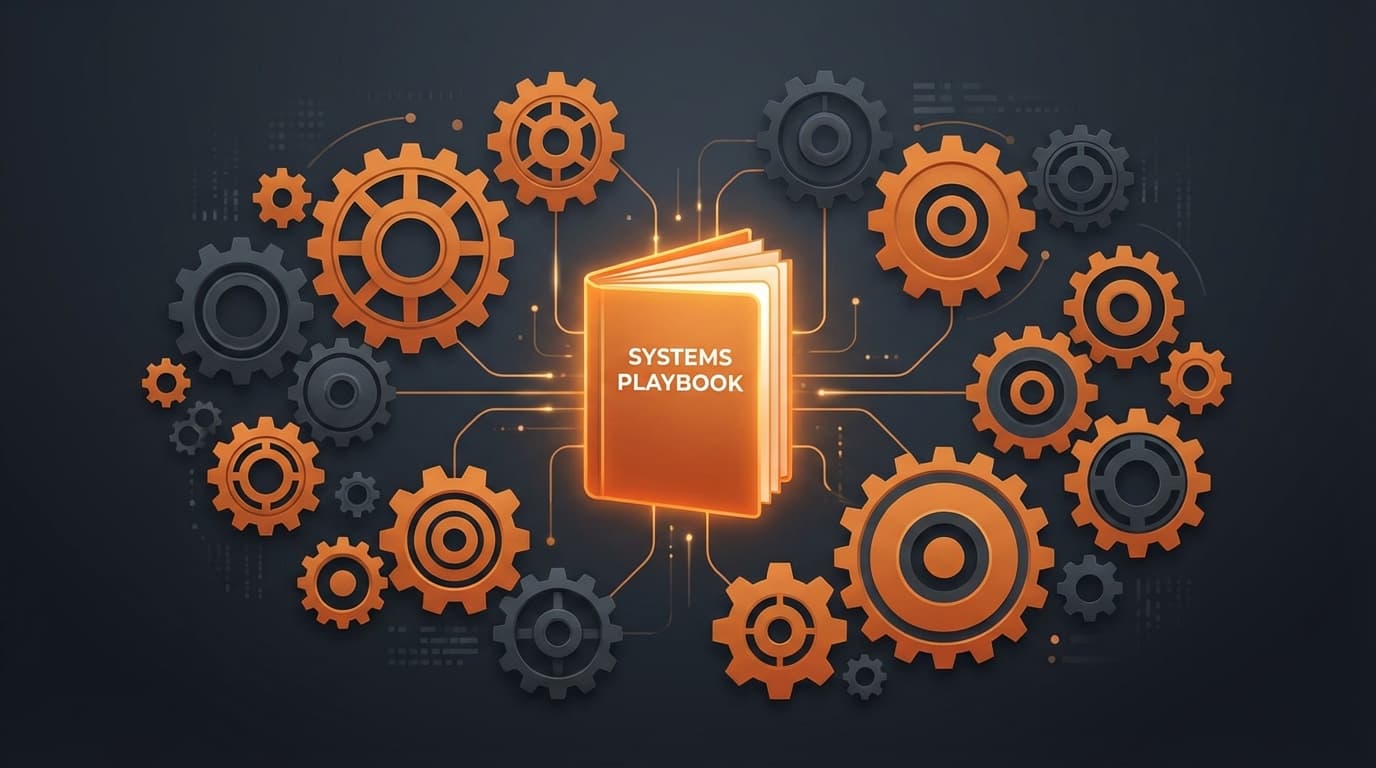
Call it The Playbook. Call it the Operations Manual. Call it whatever fits your business. The name matters less than the principle: there is ONE place, and it contains EVERYTHING. When someone needs to know how to do something, they look there first. Period.
The format doesn't matter much either - Google Drive folder, Notion workspace, shared wiki. What matters is that it's easy to search, easy to navigate, and always accessible. If your team can't find the right document in under 60 seconds, the playbook has a usability problem that will kill adoption faster than anything else.
2. Train the redirect, not the answer.
This is the hardest shift and the most important one. Starting today, every time a team member asks you a question that has a documented answer, your response is: "Did you check the playbook?"
Not "let me show you." Not "the answer is X, and it's also in the playbook." Not "here's the quick version, but next time check the playbook." Your answer is the redirect. Nothing else.
This will feel unnatural. It will feel slower. It will feel borderline rude the first few times. Do it anyway. Every time you answer the question directly, you're training your team that you are the system. Every time you redirect to the playbook, you're training them that the playbook is the system.
Within two to three weeks of consistent redirecting, something shifts. Your team starts checking the playbook before coming to you. Not because you lectured them about it. Because they know the first thing you'll say is "did you check the playbook?" and they'd rather find the answer themselves than have that conversation again.
This is exactly how the factory in China operates. No worker walks across the floor to ask the manager how to handle their station. The system is right there. The behavior is so deeply embedded that it doesn't require management - it's just how things work.
3. When there's no system, create it together - right then.
Sometimes your team member checks the playbook and the answer isn't there. That's not a failure. That's a discovery. It means you've found a gap in your documentation, and the person who found it just became your best collaborator for filling it.
When this happens, stop what you're doing and build the system together. Answer the question, and while you're answering it, document the process. Have the team member write down what you're explaining as you explain it. Then put it in the playbook immediately. Not "I'll document that later." Now.
This does two things. First, it fills the gap so nobody ever has to ask that question again. Second, it teaches your team that systems are living documents - they grow, they improve, and every gap discovered is an opportunity to make the business better. That mindset is contagious. Eventually your team will start documenting answers themselves without waiting for you.
4. Build compliance into the system itself.
If following the system is optional, people won't follow it. That's not cynicism - it's human nature. The solution isn't surveillance or punishment. It's structural: make the system harder to skip than to follow.
This can be simple. The final step of a process requires uploading a completed checklist. A project can't move to the next stage without a verification step. A notification fires if a task isn't marked complete by a certain time. The client file gets automatically flagged if it's missing required documents.
In 2026, this is where automation and AI become incredibly powerful. Instead of relying on a person to remember to check the checklist, you build automated triggers. If step 4 isn't completed by 3 PM, a reminder fires. If the client file doesn't have all required documents, the system flags it before the kickoff call gets scheduled. The accountability isn't a manager breathing down someone's neck. It's built into the infrastructure - invisible, consistent, and impossible to forget. (If you want the step-by-step method for building these processes from scratch, I wrote the DOOR System specifically for that.)
5. Celebrate system improvements, not just results.
Most businesses only celebrate outcomes: revenue milestones, new clients, completed projects. Start also celebrating the infrastructure that produces those outcomes.
When a team member identifies a gap in the playbook and documents the fix - acknowledge it publicly. When someone builds a better version of an existing process - recognize it. When your team goes a full week without asking you a question that's in the playbook - that's worth noting.
This sounds minor. It's not. What you celebrate becomes what your team optimizes for. If you only celebrate revenue, your team focuses on revenue. If you celebrate systems improvements alongside revenue, your team starts seeing systems work as real work - not overhead, not bureaucracy, but the foundation that makes everything else possible.
The Three Triggers: When to Build a New System
You don't need to systematize your entire business in a weekend. That's a recipe for burnout and abandoned documentation. Instead, use these three triggers to identify the next system to build. When any of them fires, that's your signal.
Trigger 1: You hate doing it. Pay attention to the tasks that make you groan when they show up. The weekly report nobody reads but you still spend 45 minutes on. The client onboarding steps you've done 200 times and could do in your sleep. The invoice follow-up that feels beneath your pay grade. That resentment is a signal. The task you hate is the task to systematize and hand off next.
Trigger 2: It takes more than five minutes. If a task takes longer than five minutes, it's complex enough to have steps worth documenting. Quick tasks can live in your head. Anything beyond five minutes has enough moving parts that someone else could do it wrong - or that you could do it inconsistently on a bad day. Document it.
Trigger 3: You've done it more than once. If it happened twice, it'll happen again. And the third time you do it from memory, you'll forget a step you remembered the second time. Repetition is the clearest signal that a system is waiting to be built.
The highest-leverage target is any task that hits all three: you hate doing it, it takes more than five minutes, and it's recurring. That's not just a system candidate. That's a system emergency. Build it this week, hand it off next week, and reclaim those hours permanently.
What a Systems Culture Looks Like From the Inside
When the culture actually shifts - when your team thinks in systems rather than just following them - you'll notice changes that go far beyond efficiency.
Problems stop being frustrations and start being discoveries. When something goes wrong, your team's first instinct becomes "what's the systems gap?" instead of "who messed up?" That single shift eliminates blame, reduces defensiveness, and turns every breakdown into a permanent improvement. (I wrote a full post on why this mindset matters and how it changes how you run your business.)
New hires get productive faster. Instead of spending weeks shadowing someone and absorbing tribal knowledge, they open the playbook and start executing. Not perfectly on day one - but functionally. The training period compresses from months to weeks because the knowledge isn't trapped in anyone's head.
You become optional. Not irrelevant - optional. The business can run for a week without you answering questions, approving tasks, or solving problems. You can take a Thursday off without checking your phone twelve times. You can go on vacation and come back to a business that ran just fine in your absence. That's not a fantasy. That's what happens when the system runs the business instead of you running the system.
And here's the part nobody talks about: it gets easier to build more systems once the culture exists. The first five systems are hard because you're changing behavior. The next ten are faster because the team expects them. After twenty, your team starts building systems without you asking - because that's just how things work now. The flywheel accelerates.
These shifts work. Every one of them is something you could start implementing today. Centralize your documentation. Start redirecting instead of answering. Build systems in real time when gaps appear. Add accountability into the structure. Celebrate the infrastructure.
But if you're honest with yourself, you know the hard part: doing this consistently while also running your business, serving your clients, managing your team, and handling the hundred other things on your plate. Building a systems culture requires the same protected implementation time that every other important project requires - and it's just as easy to let it slip when things get busy.
In the Implementation Club, this is exactly the kind of project we build on Thursdays. Not "talk about systems in theory" - actually build the playbook, create the documentation, set up the accountability triggers. You bring the process that needs to be documented. We help you build it in real time. By the end of the session, it's in your playbook and ready to hand off. Between sessions, the Slack community is full of business owners sharing what they've systematized, troubleshooting adoption problems, and pushing each other to keep building. When your team ignores the system you just built and you're tempted to just do it yourself - you've got people who will talk you out of it.
Building a systems culture alone is possible. Building one with a crew beside you is faster and far more likely to stick.

Jon Barrett
Jon Barrett is the founder of Implementation Club — a community for entrepreneurs who are done planning and ready to build. He's spent 20+ years building operational systems for businesses of every size, and now helps owners implement faster, get unstuck in real-time, and finally build the business they've been describing to people for years.